
 USA
USA Canada
 Australia
 New Zealand
 Europe
 UK / IRE

Tim Finley has been an outspoken critic of the lack of transparency in harness racing regarding unfortunate occurrences on our racetracks.
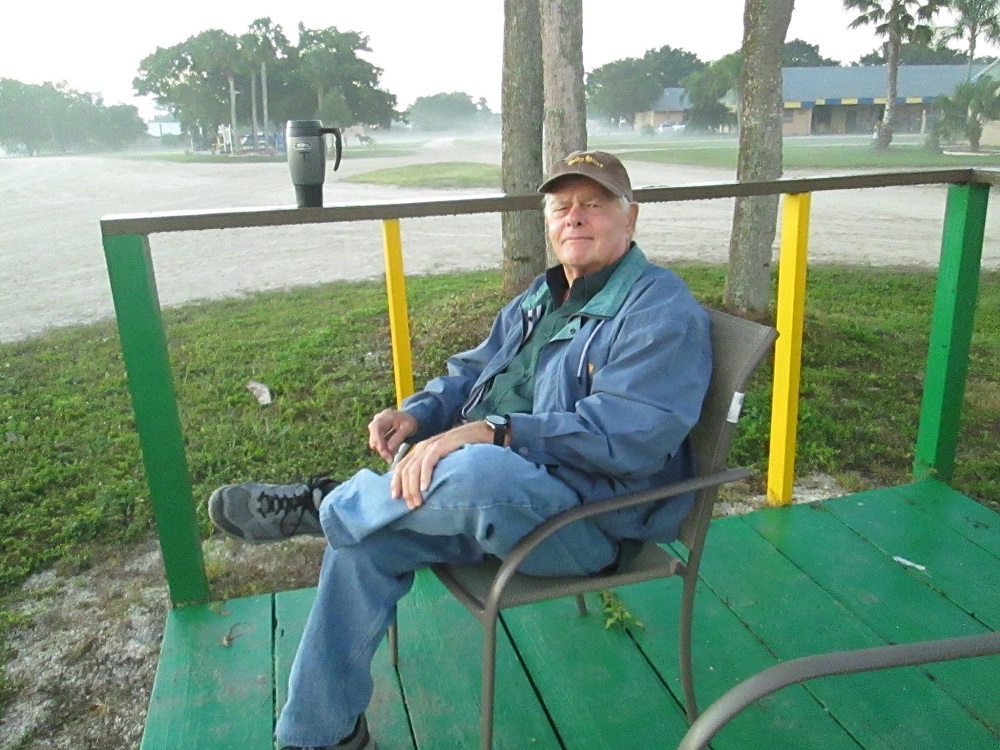
Now 76, Finley has had quite a rollercoaster ride in harness racing having had some experience as a driver in the 1970’s and 1980’s and trainer in the early part of the new millennium. He fears for the future of our grand sport without outside promotion to entice new patronage on all fronts from ownership to fan base.
His love of our equine athletes is burning with a desire to share the greatness of our sports athletes—both human and, especially, equine.
There are those that say Finley is too negative in criticizing (there are also many who silently agree with his thoughts) but he says the only way to solve the negatives is to face them head-on and put them to rest bringing the positive aspects to the forefront.
In a Harnesslink exclusive, our own John Berry enticed Finley to “spill the beans” on his crusade to save harness racing.
JB: Tim, I appreciate your willingness to participate in an interview with our readers. So, the first question is…You are 76 years-of-age. Why do this now?
TF: Hey, John, you are pushing 80 and you’re still hard at work doing the same thing! Why? Because we are both enamored with the sport, it’s glorious history and the beauty of the breed.
JB: Well, I’ve had this idea of an interview with you for some time and the Damar Hamlin incident moved it from the back burner to the front burner with the setting on ‘high!’
TF: It’s a great example because this was done in complete transparency and put football in a very positive light because of it. There were no hiding or secretive things going on with the cameras on and updates on it continually. Millions of people followed this story, and, in the end, the NFL came out of it stronger. Nobody knew the cause of this when it happened, but medical reports came out and put the incident in a positive light at the end. If that same thing happens to a horse that dies on the racetrack, that’s the end of the story and opens the doors for criticism from all sides and groups that focus primarily on the incident itself and the silence that follows.
JB: How did you become involved in harness racing?
 TF: I was raised near the Amish country in Ohio and was always intrigued with their horses. Not having a background in racing or horse breeds, I really didn’t know that their buggy horses were of a specific breed. About 50 years ago, an Amish friend asked me if I would like to go in halves with him on a buggy horse that was going to be sent to the racetrack. He took me for a ride and, in about :29 3/5 seconds, I was hooked. Since that day, I have been involved with the standardbred horses—literally on a daily basis.
JB: So, the harness horse is your favorite breed.
TF: You said harness horse…I say “standardbred.” Most people outside of the fraternity of harness racing do not realize that the standardbred is a very special breed—some of which are very expensive! Most of those people are uneducated about our breed and think that a couple of farmers bring their horses in from the field, put a “cart” (sulky) on them and see which one is faster.
In other words, will Farmer Brown beat Farmer Jones. That happened during the infancy of our sport on roads and highways in the east but is a finely tuned sport and industry with close to a half billion dollars in purses up for grabs just last year. To get more involvement in the sport and industry of harness racing, we absolutely must educate people about our very special breed—great gaited, strong, fast and very reliable. Sitting behind one is the greatest feeling in the world—and I am living proof.
JB: Let’s get down to the nitty-gritty…just why do you believe that you have the insight into the future of standardbred racing and why do you believe that your solutions are viable for the continuance, success and growth of standardbred racing.
TF: As a career stockbroker, I was trained to predict the future business trends in an attempt to recommend securities that would be profitable to investors. I apply futuristic tactics to harness racing the same way I did in the brokerage business. I am a problem solver. I pride myself in being a problem solver.
JB: There are a lot of “ups and downs” in the market and the one bit of advice I remember the most is…”If you’re interested in markets where prices do nothing but go up, try the supermarket—not the stock market.” Having said that, what do you consider the most serious problem in harness racing?
TF: This is a no-brainer. We have no “visible” leadership. I use the term “visible” because there may be people behind the scenes that are trying to formulate plans for the future, but we don’t ever hear anything. Personally, “We, the People” rarely hear anything about plans for the future of our sport. A few months ago, there was a racehorse summit in Arizona. I was stunned that virtually nothing was shared from the USTA about the summit…STUNNED!
I see little in preparing for the future of our grand sport. I realize that casino political donations certainly don’t help racing and promises are rarely kept, and the proof is in the pudding. Heck, in Florida, the voters allowed for the construction of casinos in certain counties but, when the Pompano Park situation arose, the voters were locked out of the process when the Governor signed the decoupling bill. I suspect that political donations played a role in that…and it put thousands out of work in an industry that was viable in South Florida for 70 years.
JB: You often speak of transparency in harness racing. What’s you’re feeling about that?
TF: It’s non-existent. We see the great stories but most of the negative is swept under the rug. Negativity should be a catalyst for problem solving. Problem solving establishes processes that remove obstacles so businesses can reach strategic goals. Negativity creates a gap between actual results and desired outcome. To reject the notion that we have problems—whether they be with medication or outcomes of races—is destructive.
JB: What about a think tank?
TF: Absolutely, but we need the right people. Harness racing needs creative, forward thinkers. In addition to a “think tank,” we need a “do” tank. We need people who will take the bull by the horns and put plans into action. You put a few columns up on Harnesslink concerning the 20% plan. Has anyone stepped up to the plate to put these innovative ideas into action? Not that I know of.
JB: Do you think harness racing is fixed?
TF: Great question…but one that I cannot answer. If it is, it’s a well-kept secret. Public conception is the most important thing here and may be able to find instances unjust about any sport where there is wagering. Baseball, football, thoroughbred racing, harness racing, greyhound racing and any other sport where there is a “line” is subject to that question. So, the only way to gain the public’s trust is aggressively let the public know that harness racing is strictly policed, and anyone caught is history! End of Story.
JB: We recently witnessed a substantial number of veterinarians and trainers convicted of crimes involving illicit drugs. How do you think this affected the image of harness racing?
TF: First of all, I wasn’t surprised about this at all. I got involved in this sport 50 years ago and it was going on then. There were guys pulled over in a rest area close to the track and it was no secret why they were all there. It was primarily overlooked back then…but not causing the ruination of our sport. About the image, any time we clean something up, it’s beneficial.
JB: What ONE problem has negatively impacted the sport?
TF: Indian file racing…boring! I brought a lot of clients to the races back then and the vast majority said it was boring with fields strung out in order and half of the field not even able to get into the race because they were too far back. It’s a lot better today, especially in Ohio, Indiana and The Meadowlands, to name a few places, but, once the die is cast, it’s tough to change a person’s outlook.
JB: How do we make it less boring?
TF: This is a tough part of the equation. It requires brilliant creativity. I compare standardbred racing to the Ed Sullivan Show and casinos to The Voice. I watch The Voice and am amazed at the creativity that goes into it. It’s absolutely brilliant and any audience deserves brilliance. Most of us who are involved in standardbred racing love it because we understand it. We have experienced its wonder. Many of us have owned, trained, driven and/or groomed these magnificent horses.We have felt every emotion from pain to glory. It’s in our hearts. Because we understand it and it is in our hearts, we accept what others find boring…like 20 minutes of waiting time between races, to name one thing.
Many get up in the early morning when it is dark and put their heads down on the pillow in the darkest hours of night. We love it! The stable smells so sweet…we would rather feed our horses before we feed ourselves. The Meadowlands puts on a tremendous show and harness racing needs shows that depict passion—the same passion we feel. Hosts should explain the aerodynamics of why a driver leans back in the sulky to eliminate any viewer’s thought about a horse being held back. Interview the guy on the track maintenance tractor…interview the paddock judge…explain judge’s scratches. If they found a needle in a horse’s neck, bring it out in the open and tell the public just why the horse was scratched. It’s all about transparency…just like in politics…NOT! Transparency does a world of good in building public trust.
JB: I’ve always thought that harness racing should have its own television network.
TF: That’s my next thing! Absolutely! That would being the education aspect to the next level. It would work wonders. That way, we could transform it from a wagering venue to an all-American sport. There are some 320 million people living in the U.S.A. If you get 5% of them, that’s 16 million of an audience. We shouldn’t overlook that! In other words, technology has left the days of folks driving five miles or 15 miles to the track, finding parking, getting a seat, spending $4 bucks for a hot dog (probably a soggy one with a stale bun), spending $6 for a beer in a plastic cup then driving home at 11:30 at night after watching something boring is history. Creative education is paramount and can be done very effectively via the airwaves. It’s all about the experience.
JB: How significant is the effect of horses having tragic incidences on the track?
TF: Extremely significant! Our accidents and injuries and deaths are not nearly proportionate to thoroughbred racing, but we fail under the umbrella of “horse racing!”
JB: Animal exploitation has been in the news about our equine athletes. What is your take on that aspect?
TF: Well, it certainly has become a sensitive and significant topic recently but, as you, JB, said in a recent column of yours, it encompasses all sports and all types of athletics. But there is a stigma that people would prefer to wager on the outcome of an athletic event or visit a casino or partake in something other than a venue that results in possible injury or worse to a horse.
JB: Well, you, sir, post videos of accidents on Facebook and your website. Why do you do that?
TF: Because they are sickening, that’s why! Just as sickening as the officer who knelt on George Floyd’s neck. If that hadn’t been caught on video and shown over and over again, I would hate to speculate!
JB: Well, that’s enough for this session, Tim. I appreciate your time and input and I am looking forward to wrapping things up in Part Two with some more of your thoughts, insights and solutions to make harness racing thrive and survive.
This is Part I of the Tim Finley article. Part II will appear in Harnesslink early next week.
by John Berry, for Harnesslink

