
 USA
USA Canada
 Australia
 New Zealand
 Europe
 UK / IRE

Although the winners keep coming for West Melton trainer Ken Barron, he freely admits his training days are coming to an end.
Barron has been involved in harness racing for close on four decades, training close to seven hundred and fifty horses and driving over a thousand winners.
He began his working life as an apprentice mechanic at GWDs in Invercargill straight out of school before moving on to JJs and then Southern Suzuki.
Ken’s father Ron retired early from the freezing works and trained on a more full-time basis but he didn’t have a full-time role for his son.
“I helped Dad and Clark at home on a part-time basis and I got my junior driver’s licence which I had for two seasons. Murray Brown came to me in the early nineties and asked me if I’d drive at the Invercargill Workouts. He had Henry Skinner, Alan and Brendon Scobie driving for him on race day but they wouldn’t go to the workouts on a Sunday,” Ken said.
So Barron took up the challenge and his career in harness racing was underway.
“The first year he gave me a stopwatch. The second year I drove five winners, the next year I had fifteen, then twenty four and the following year I had thirty three. It was all through going to the Invercargill Workouts.”
Meanwhile former Tapanui butcher John Lischner who’d moved north to Ashburton was on the lookout for a stable driver.
“Dad came to me at Forbury one night and said John Lischner was looking for me. I didn’t know him but Dad said he may have a job offer for me.”
Lischner met Barron and explained to the Southland reinsman that he was becoming frustrated when trying to book drivers for his horses.
“He said he needed someone to work the horses and was sick of not been able to get a driver.”
Barron, who normally went to Tim Butts in the freezing works off season, told Lischner he would bring a couple of horses north and work for the Ashburton trainer on a trial basis.
“At the end of winter we just sat down and John asked me what I liked and what I didn’t like and the rest is history. You wouldn’t believe in seven years you could go from being a mechanic, to part-time harness racing, moving to Canterbury and then representing New Zealand at the World Drivers Championship (1999).”
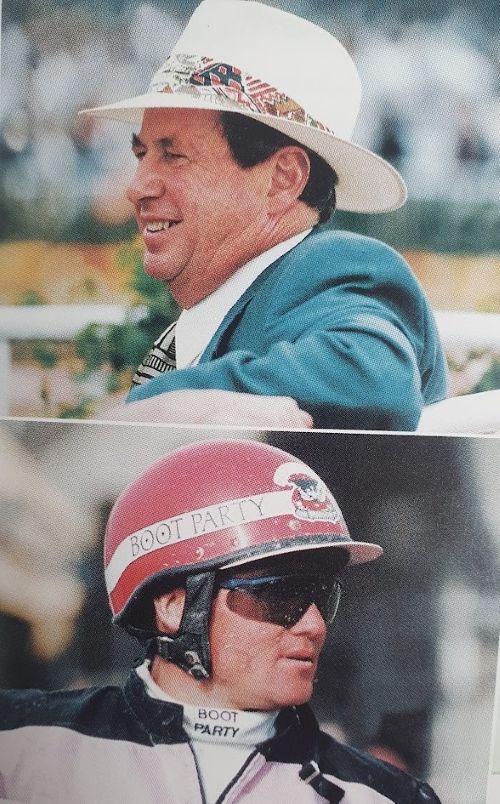
The move by Barron to Canterbury created a real shake-up in the driving ranks and the way races unfolded, particularly at Addington.
“I’ll never forget that one night I drove a horse at Addington and the horse in front of me was going no good and I was bolting. I came out down the back thinking I’d win, but my horse weakened to about fifth or sixth. I said to John that we were doing something wrong here and we’ve got to fix it.”
From that point Lischner adjusted his training regime, Barron modified how he drove and a new farrier in Kerry O’Reilly was employed.
“We trained our horse on an 800 metre track and all the tracks in Canterbury are 1200 or more and I reckon our horses found the line better than anyone’s.”
Barron feels the composition of their track could have played its part in making the horses able to cope with tougher runs.
With Barron in the mix, the way races were run in Canterbury changed.
“Basically they were running 3-25 on average for 2600 metres and I dropped them down to 3-18. Every time they jumped on the brakes I just peeled out and went around them and our horses were strong enough to hold on.”
Barron said in the early days his driving style copped a bit of flack.
“People said to me ‘what are you doing up here? – there’s not room for you.’ I told them that I would just have to make room. The criticism was more off the track. I didn’t get it on the track, but it didn’t worry me. I’ve never taken a backward step and I didn’t worry about that stuff.”
Barron said the quality of stock in the stable improved and owners were lining up to have their horses trained by Lischner.
“It got to a stage where I was afraid of taking the float to the races with an empty space.”
In 2002 Lischner and Barron decided to move closer to Christchurch.
“I said to him Addington will never shift, but we can. We were going to Addington thirty times a year. They called us ‘last race Lischner’ because our horses were always in the last. In those days you’d be getting home at midnight and start early the next morning so we moved from Ashburton to West Melton.”
Lischner and Barron trained there for three seasons and that’s where Barron still trains today, although he’s sold the property and rents it back.
Over the nearly four decades of Barron’s involvement in the sport there have been many highlights.
Lady Toddy’s win in the 2005 NZ Standardbred Breeders’ Stakes was Barron’s only Group One win as a trainer.
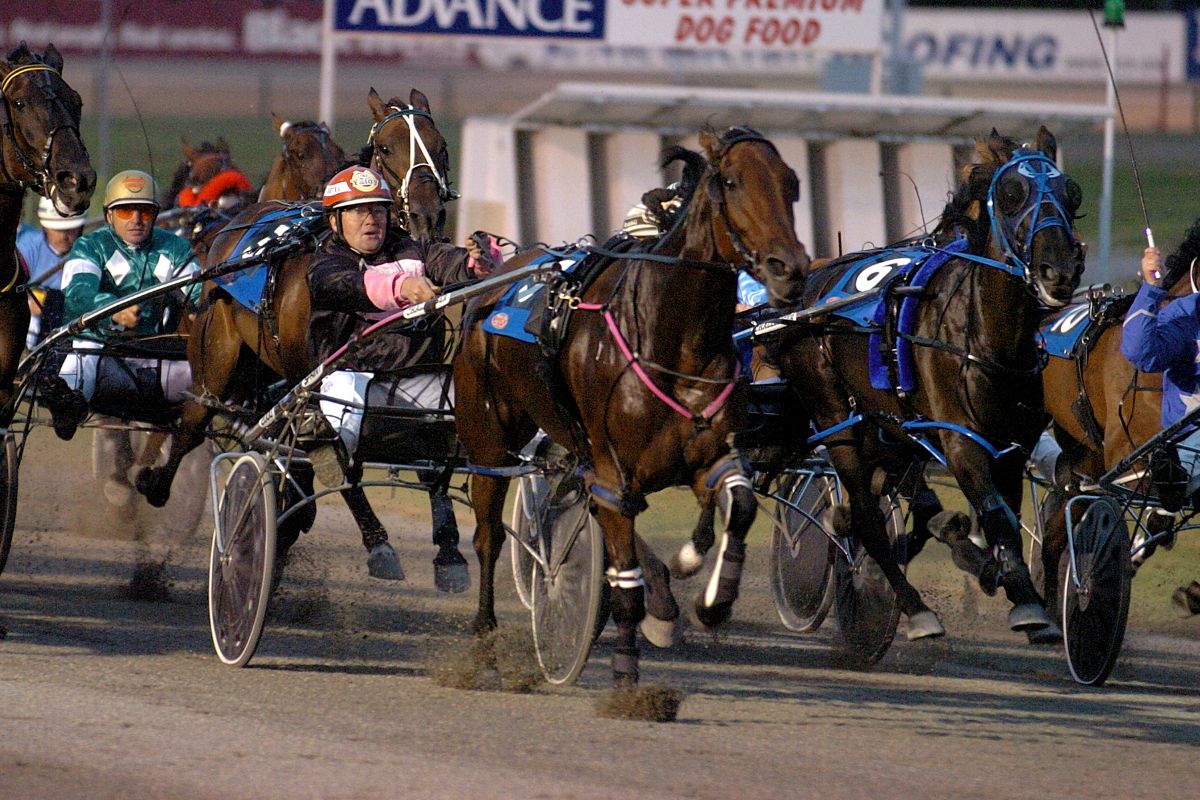
“When you put her in the box in the old days at Addington she’d go to sleep. But as soon as you walked her out with her gear on it was like she was hit by a lightning bolt. She was classy.”
Georgetown was his biggest winner as a trainer with ten wins including the Listed Harness Million for three year old colts and geldings and the G2 Elsu Classic.
“For basic nature he’d be the best horse I’ve had anything to do with. You could take him to the pub. He was that nice.”
As a driver Eastburn Grant’s win in the Rowe Cup was another treasured moment.
“Heart of a lion. He was absolutely the toughest horse I ever drove. If I was going to war he’d be the one I’d want to go with. He got crook late in his career and I tell everyone that he should have won more than one Group One.”
But Barron rates his win with Stars And Stripes in the New South Wales Derby in 2000 and OK Rock’s win in the 1999 NSW Oaks as his two driving career highlights.
“She (OK Rock) sat three wide for nearly the whole trip. She got a standing ovation and it was her first ever start in Australia. It was unreal to come back to scale. Now you’ve got to start in a heat before the final. Back then she got in because she won the Great Northern Oaks. She was a hairy gutted little filly that wore spreaders, but she was tough.”
OK Rock was owned by Rob and Elenore Spencer who have been one of Barron’s longest stable clients. Their latest winner was Desert Dancer on Friday night at Addington. The three year old is trained by Barron.
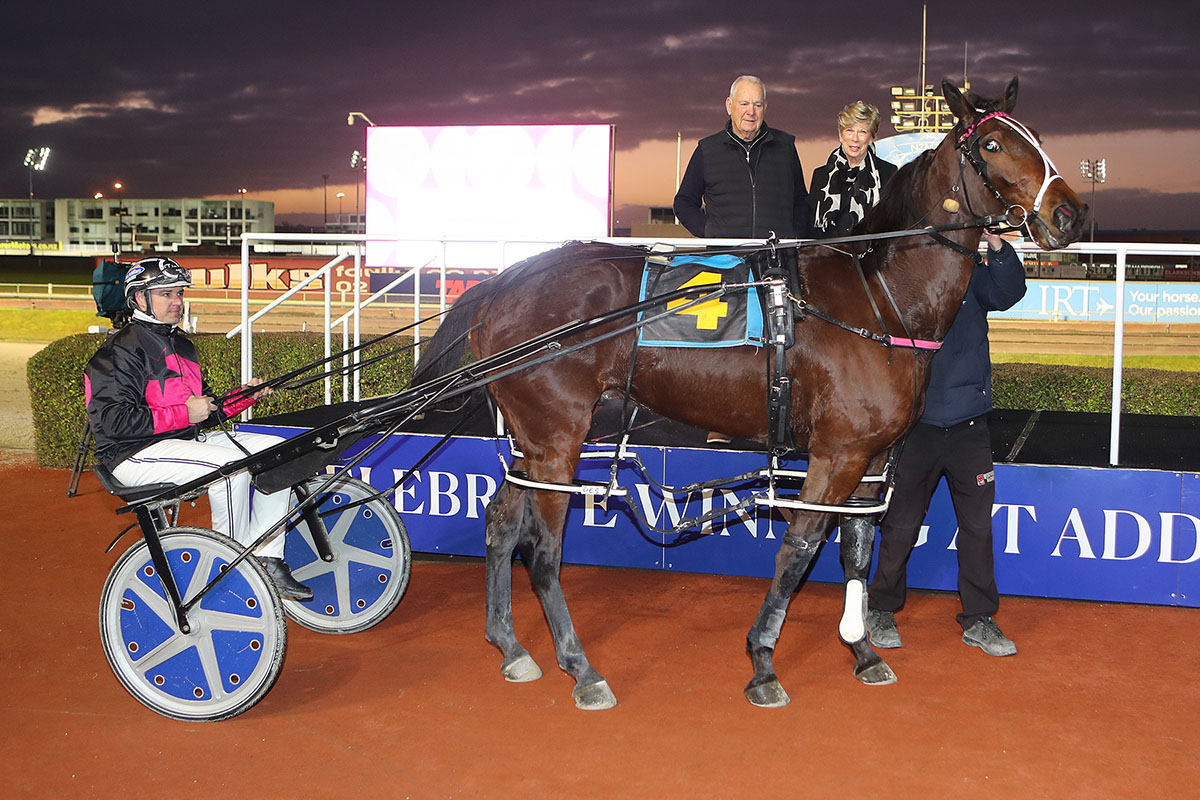
Stars And Stripes win in the Derby was just as impressive.
“He won the NSW Derby four weeks after winning the New Zealand Derby. The horse didn’t go anywhere (after the NZ Derby). We took him to Methven twice and worked him up on the grass, took him to Sydney and he won the NSW Derby. He could only be described as sheer brilliant. He had speed to burn.”
Going into that race Barron had a plan.
“When I thought it was time to go I’d count to three because he never cuts in until he’s clear of other horses. He was tracking up three back three wide. I did what I said I’d do and when I hooked him out he went past them in about six strides and won by five lengths.”
Another highlight was Stars And Stripes win in the New Zealand Derby, a result that was decided after a lengthy enquiry.
“I got into trouble. I hooked out three or four wide and zoomed up to them. He hit the front halfway down the straight and ran to the markers. I was confident (of holding on to the win) because I had done nothing wrong. I crossed over well ahead of the other horses and I didn’t interfere with anyone.”
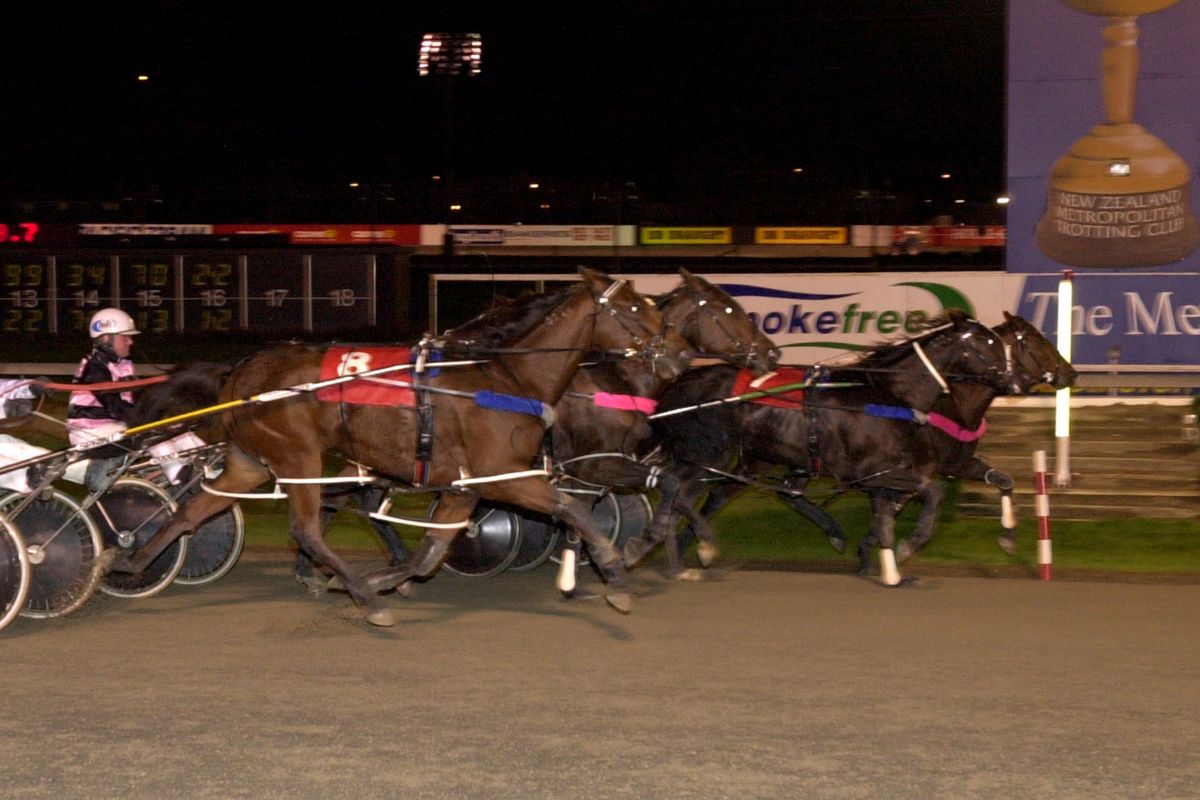

Barron says his three favourite tracks are Victoria Park, Hutt Park and Harold Park, all of which are no longer around.
Ken has trained 748 winners – 99 with Lischner, 90 with his brother Tony and 559 in his own right.
Of those wins Ken has driven 317 with Blair Orange driving 267 and Sam Thornley 35.
As a driver Barron drove 1,069 winners, 371 of those were for John Lischner.
His Group One winners were Bradshaw in the Easter Cup and Eastburn Grant in the Rowe Cup, Stars And Stripes in the NZ Sires’ Stakes Final, the Northern Derby, the New Zealand Derby, the NSW Derby and the Victoria Derby and Lady Toddy in the NZ Standardbred Breeders’ Stakes.
With Barron doing the driving Lischner won the New Zealand Trainers Premiership in 1996/1997 and 1998/1999.
Barron also represented New Zealand in the 1999 World Driving Championship held in Australia.
Ken is currently working twenty five horses with the help of Blair Orange and Sam Thornley, but says he’s trying to wind down his involvement in the sport.
“Sam’s just such a good kid and he’s very keen on the training. I’ve told Blair and him for two years now that the equation is very simple. The easier I get it the longer I’ll last. There’s no date for me leaving. It’s Sam’s last season as a junior driver. He’s young, a good worker and enthusiastic and a good driver. More importantly he’s keen on the training. I’ve been to a few clearing sales and I didn’t want to have one. I’d rather help someone like Sam. What John Lischner did for me I’m keen to do for Sam.”
He also said, “I haven’t missed a complete winter. The early morning feed up, the late nights, the long weeks and hours get to you. Rather than be relied on I want to be the spare person. I feel like I’ve earned my time to slow down and get out. I’m very good friends with Peter Williams the galloping trainer. He retired and Colin Jillings told him the biggest mistake he made was carrying on too long.”
Over the years Barron was a regular buyer at yearling and weanling sales but that doesn’t happen these days.
“That’s part of my exit plan. I’m also good friends with John Wheeler and he told me he hadn’t bought a horse at the yearling sales for six years and he’s still got twenty five in work. I thought if you keep replenishing, how are you going to get out.”
Barron has helped educate a few young people in the sport and says a high proportion of them don’t last.
“I’ve had a lot of kids through here in the last twenty five years and a lot of them aren’t dedicated enough. They don’t like working on Friday night, at the weekend or on Sunday because they want to be out socialising. The ones that get to driving on race day are half dedicated (to succeeding) but they need help. Juniors that need help are the ones with zero to twenty wins but not after that. That’s only my opinion.”
He says the juniors get far more opportunities than they used to.
“The executive is recognising there’s not enough people coming into the industry who want to make careers out of it. The junior drivers of today don’t even know they’re alive. They get so many opportunities and I’ve seen them all, going back. They’re living on their wages and banking all there driving fees. Instead of giving Carter (Dalgety), Wilson (House) and Sam some of the drives they should be giving guys that can’t win races the drives. If you want to keep them in the industry you’ve got to help the ones that haven’t won any races.”
Barron is a strong advocate of having a rating system for junior drivers so that some of the lesser lights get more driving opportunities.
On the administration front Ken has served on the committee of NZ Met and was President of the New Zealand Trainers and Drivers.
“It was very frustrating. Back in those days there was a real disconnect between administration and us. There’s a lot more horsemen on the committees now and our voice is heard a lot better than what it used to be.”
Although there are some positive signs in New Zealand harness racing, Barron feels the sport isn’t in good shape.
“We’re going to run out of product. The prize money has lifted and there are a lot of incentives from the top right down. Entain has helped a lot. Until we get more foals on the ground I think we’re in trouble.”
He’s also concerned about young trainers who don’t have well financed owners.
Barron says a lot of the top end horse are bought by multi-millionaires and even when he looked at buying from the second tier, they were also difficult to purchase.
“It didn’t worry me because I’ m in the twilight of my career but I don’t know how the young guys are managing. The horses are definitely earning more, the drivers are earning more but I couldn’t say the sport was in good shape until the day those foal numbers go up.”
by Bruce Stewart, for Harnesslink

